
Helping students develop their writing skills often means guiding them toward the rich, personal stories that make writing meaningful. This presents a challenge to educators, regardless of the grade level sitting before you. One powerful and engaging approach is Artifact Writing—a method that allows students to connect with their writing by using small, meaningful objects from their lives to spark personal narratives. Betsy Hubbard, in her article “Using Artifacts and Photos to Inspire Writing,” describes the magic of this approach, likening a writer’s notebook to a “trunk” that holds memories, ready to be explored and shared. This lesson helps students see their notebooks as containers of moments that matter, inspiring authentic writing.
Here is a way you can use it with your students to help develop writing skills by connecting meaningful objects from their lives to personal narratives.
All the materials needed are:
- Journals or notebooks
- Tape or glue
- Various flat objects from students’ lives (e.g., receipts, photos, nature items, fortune-cookie fortunes, postcards, etc.)
Lesson Steps
1. Select an Artifact
Ask students to choose a small, flat item from their lives that holds personal meaning—a receipt from a memorable outing, a fortune cookie slip with special words, or a piece of a placemat from a family dinner. Hubbard points out that artifacts like these can bring memories to life in a unique way. The process of selecting a personal object turns their journals into a space where “moments are meant to be held,” transforming an ordinary assignment into a meaningful, reflective activity.
2. Attach the Artifact
Students then tape or glue their chosen artifacts into their journals, physically connecting their memories to the page. This act, Hubbard explains, turns writing into a sensory experience. In her work with students, she saw a variety of treasured items—from a framed photo of grandparents to a worn-out teddy bear. Each item provides a starting point for students to recall and describe the moment it represents.
3. Write About the Moment
Guide students in writing a short narrative about their artifact using three prompts to structure their thoughts:
- Paragraph 1: Where were you and what were you doing?
This question helps students set the scene, grounding their story in a specific place and time. Often, our students feel they have not experienced anything meaningful yet as they are “too young.” - Paragraph 2: What was your favorite part of this moment? or Why did you love this artifact?
This prompt helps them capture the special aspect of the experience, like the way their teddy bear’s “matted fuzz” became a comforting feature, as Hubbard described. The student can examine the artifact and tie their emotions to the moment. - Paragraph 3: Why is this a moment you’ll always remember?
Here, students reflect on why the moment holds lasting importance, emphasizing the emotional layer of their stories.
These prompts allow students to go beyond surface details, encouraging sensory language and descriptive phrases that enrich their writing. Hubbard’s suggestion to start with a simple list of descriptors, and then move to specific phrases, supports this approach by guiding students to expand basic words into vivid expressions.
Channeling emotions and feelings about people and places in our lives can seem daunting. Still, through Artifact Writing, we can analyze, internalize, and process deep emotions we may not have otherwise explored. This creates authentic pieces of writing without the typical groans and complaints.
Tips for Success
To help students thrive in Artifact Writing, here are some key strategies:
- Encourage Close Observation
When you begin, let students examine their artifacts closely to determine their significance or to recall the moment. Hubbard suggests jotting down “tiny details that might go unnoticed,” which can lead to powerful discoveries. This exercise mirrors the process of close reading, helping students become attentive observers of their own writing and experiences. - Focus on the Story, Not Perfection
Emphasize that Artifact Writing is about capturing a memory rather than perfect grammar or spelling. This helps students feel free to express themselves without worrying about making mistakes. Making mistakes is a barrier seen in classrooms all over the country. - Foster a Sense of Community
Create opportunities for students to share their journals. This can be done through “Chalk Talk,” where it is silent, in Writing Groups where students offer praise and positive feedback, or partners, where students whisper to a close partner. Whichever method is used, students must feel it is a safe space to express their feelings without judgment or ridicule. Hearing each other’s stories fosters a sense of belonging and introduces them to the diverse experiences within their classroom. It can also inspire new ideas and approaches to writing.
Why This Lesson Works
Artifact Writing transforms writing into a personal, reflective journey. As Hubbard notes, when students view their notebooks as “trunks” for their memories, they begin to see writing as a way to archive their lives. This approach grounds their writing in objects that mean something to them, giving each story depth and authenticity. For struggling writers, Artifact Writing provides an entry point into storytelling by connecting words with real-life experiences. It shifts writing from a routine task to a meaningful way to capture moments they can revisit, share, and cherish.
By incorporating Artifact Writing into your classroom, you give students the tools to develop their voices and find joy in storytelling. They’ll discover that their lives are filled with stories worth telling and that writing is a way to preserve those memories and moments.
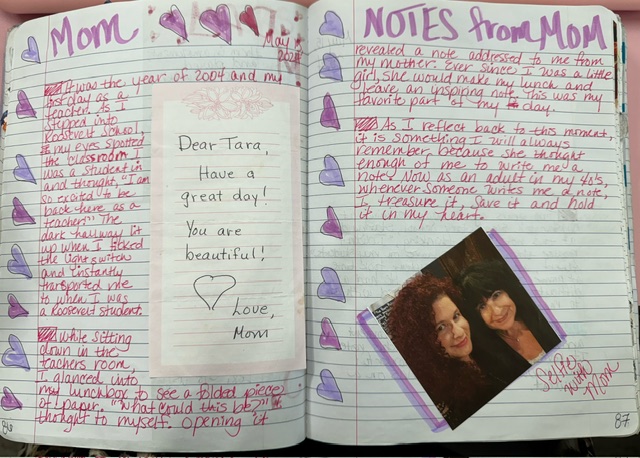
Pictured above is an example from my Teacher’s Notebook. Modeling is a key component to all writing and I typically write along with the students. This creates a community of writers and a safe place for all writers.
Interested in learning more about using Artifact Writing in your classroom? Reach out, and let’s collaborate to inspire and elevate student learning together through PLCs or PD Workshops, Training, and Modeling.
Teaching with Temprano is an Educational Consulting company whose sole purpose is to collaborate, educate, inspire, and provide real-world ELA strategies and lessons you could use tomorrow with your students. Districts that wish to hire me for PLCs or PD workshops, email me at teachingwithtemprano@gmail.com


