

“That could be an artifact journal!” one of my students exclaimed with pride during our annual 5th-grade field trip. I paused, smiled, and thought, I wish I had recorded that moment.
It was more than just a student noticing something remarkable—it was a sign that our work in the classroom was alive and real to them. In that moment, I realized just how powerful intentional writing experiences could be. And yet, too often, the daily grind of teaching makes moments like that feel few and far between.
Between lesson planning, behavioral challenges, and the push to meet academic benchmarks, not to mention the ever-looming presence of AI that makes copy-paste answers far too tempting, it can feel almost hopeless to teach writing. I know the feeling well.
For years, I’d drag myself home, totally drained, with a pile of essays waiting in Google Classroom (or stacked in paper form). After COVID, I stepped into an Interventionist role, working specifically to raise NJSLA-ELA test scores, especially the daunting Writing About Reading section.
I went searching for the best strategies, the most impactful projects. But in that search, something unexpected happened: I circled back to the beginning.
Before I became a classroom teacher, I was already an interventionist, bright-eyed and full of promise. Back then, I created a tool to help my students discuss books meaningfully—and then turn those conversations into thoughtful, reflective writing.
I dug up my old notebooks. There were doodles, diagrams, and examples from a time when I believed anything was possible. And you know what? The results I saw with my students back then were incredible. Even the most hesitant writers were producing rich, meaningful work.
Reading Squares was the strategy. It helped my students understand what they read, talk about it using academic language, and then write about it with confidence.
And it’s still working.
Reading Squares saved my students. It helped them find their voice on the page—and it can do the same for yours.
But one question kept tugging at me: Are my students really reluctant? That term implies disinterest or unwillingness. But the kids I work with? They care. They want to understand what they read. They want to write more. Many of them beg for extra time to journal, to craft their stories, to respond to literature in meaningful ways.
They’re not reluctant.
They’re striving.
Striving captures what’s really going on: they’re reaching, pushing, and working toward grade-level success. They’re not passive; they’re engaged and hungry for tools that actually help.
So here’s my challenge to you: replace the word’ reluctant’ with ‘striving’ in your mind and in your classroom. Say it out loud. Write it in your notes. Watch how your own perspective shifts.
These kids aren’t stepping back from the challenge—they’re stepping into it.
And we owe it to them to meet them there.

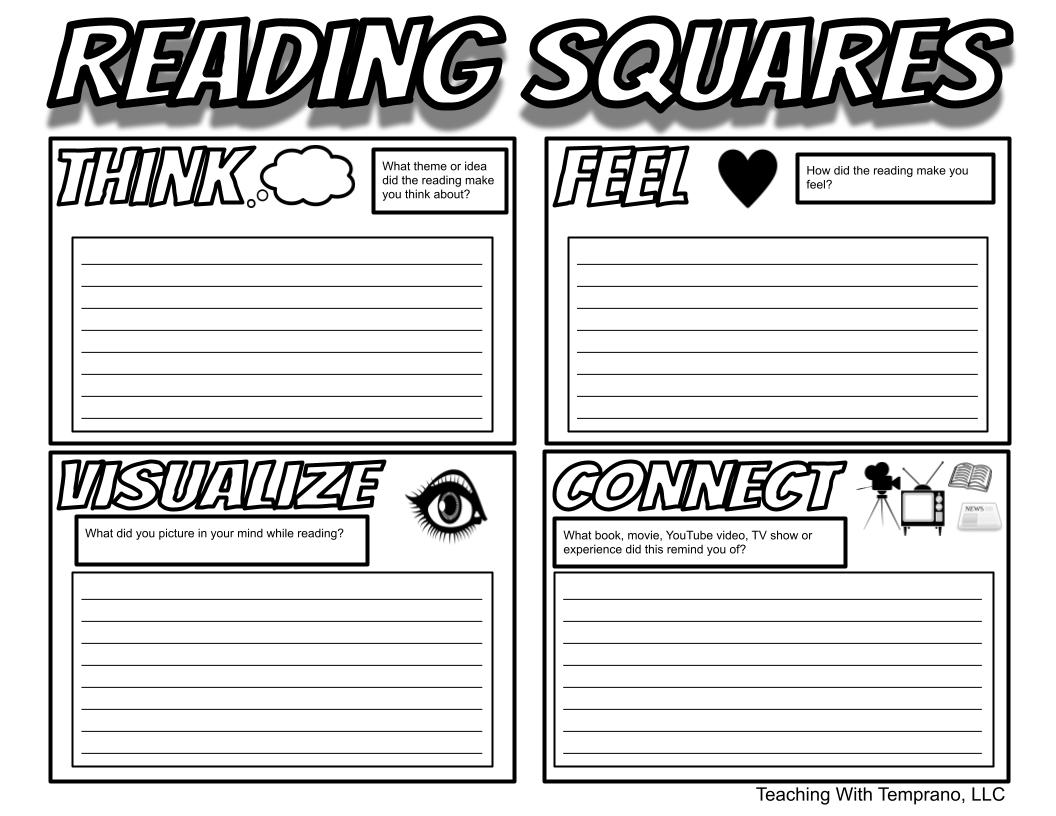
Want to learn more about Reading Squares and how they can transform your students’ writing? Stick around—more tips, tools, and classroom stories are coming your way.
Teaching with Temprano is an Educational Consulting company whose sole purpose is to collaborate, educate, inspire, and provide real-world ELA strategies and lessons that you can use with your students tomorrow. Districts that wish to hire me for PLCs or PD workshops, email me at teachingwithtemprano@gmail.com

 Teaching with Temprano