In the modern classroom, the need for academic conversations that enhance the writing and revision process is paramount. When students recognize opportunities to elaborate on their thinking while writing, it signifies a step toward independence and lifelong writing skills. As an interventionist observing students within a tiered learning system, it is evident that engaging in discussions about writing fosters self-regulation more effectively than solitary reflection. Educators need practical strategies and guidance to cultivate these academic conversations, which will ultimately improve writing outcomes and prepare students for standardized assessments.
The Importance of Academic Conversations
Vygotsky’s concept of “tracking the movement of the mind” is crucial in understanding and improving writing. Academic conversations provide a platform for students to articulate their thoughts, receive feedback, and reflect on their writing. This process of verbalizing and discussing ideas helps students to internalize and elaborate on their thinking, leading to more detailed and reflective writing.
According to Kissel (2017), “Over time, students can see how their thinking evolves” (p. 45). This evolution is facilitated by academic conversations where “students serve as teachers” (Kissel, 2017, p. 112). By asking children to reflect on their learning, “whether it’s verbal or written – is much like asking someone to examine the joys and challenges of their lives” (Kissel, 2017, p. 63).
Strategies for Enhancing Writing through Academic Conversations
Praise, Positive Feedback, and Practice: Elaboration and reflection are more likely when students receive encouragement and constructive feedback. Providing time for students to practice these skills is essential.
Intentional Discourse: Researchers suggest that intentional, structured discourse is key to effective writing. Educators must create opportunities for students to engage in meaningful conversations about their writing, focusing on specific elements such as sensory details, key points, and writing craft.
Guided Activities: Educators can simulate the student experience by participating in guided activities. For instance, writing a ten-minute journal entry and then using guided questions to interview a partner about their writing. This process helps educators understand how to facilitate similar activities with their students.
According to Zwiers (2009), “Students became more independent thinkers and talkers, shaping their conversations on their own” (p. 25). This independence improves whole-class discussions, as “students used many of the prompts from their cards during group discussions” (Zwiers, 2009, p. 34). Instead of depending on the teacher to mediate comments, “students built their responses on others’ ideas without ‘popcorning out’ unrelated thoughts” (Zwiers, 2009, p. 37).
Implementing Academic Conversations in the Classroom
1. Creating a Guide for Students and Educators
A step-by-step PLC was developed for grades 3-8, offering strategies to foster a community of writers through intentional discourse.
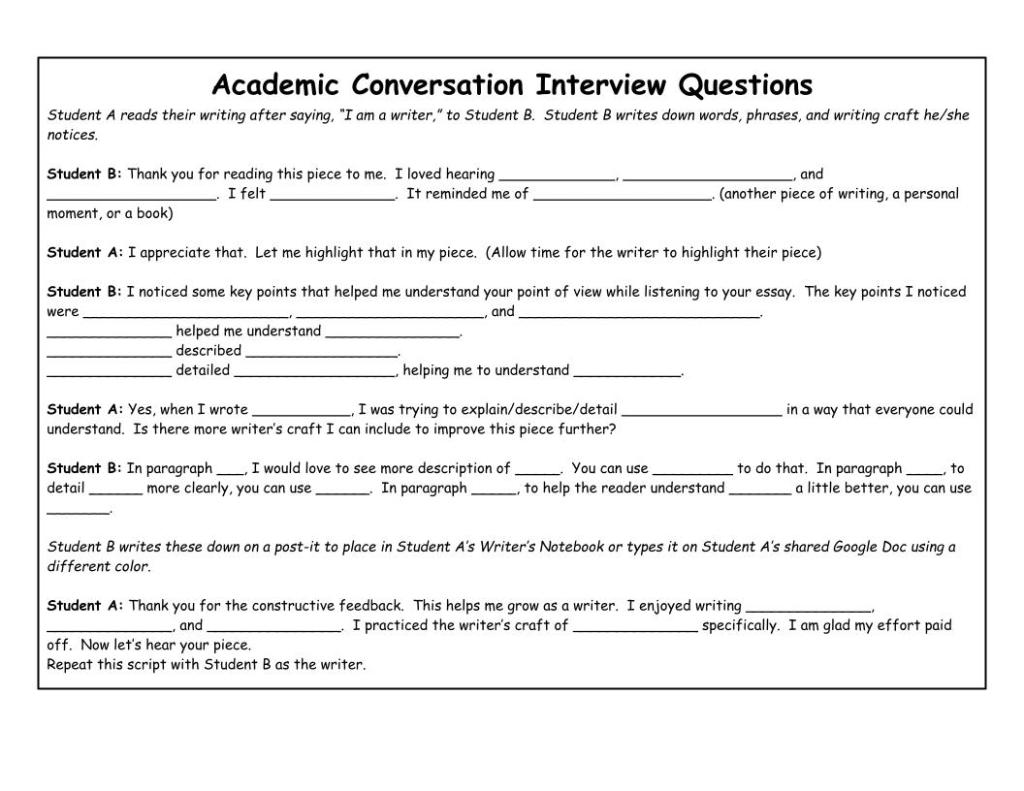
Sentence Stems and Interview Activities: Specific structured prompts to help students engage in meaningful conversations about their writing. Examples include:
“What are some words or phrases you enjoyed hearing from my writing?”
“What were some key points I mentioned that helped you understand my answer to the question?”
“What craft could I include to make my writing better?”
Student Writing Samples: Showcase samples of student writing before and after academic conversations to demonstrate the impact of these discussions on writing quality.
Writing Exercises: Students write a short piece and then engage in guided discussions using research-based questions.
Partner Interviews: Writers will interview each other about their writing, noting key points and potential areas for elaboration. These are not hard and fast interview questions, but a way to begin the conversation.
Reflection and Sharing: Writers will revise their writing based on the feedback received and share their final versions with the group.
Reflection and Application
After participating in these activities at a Professional Learning Community or Professional Development Workshop, educators reflect on how they can integrate these strategies into their teaching practices. Questions for reflection may include:
“How can you use this in your practice of teaching writing?”
“How will this work with your students?”
“What are some ways you can use this strategy in your writing class?”
By integrating regular practices where students reflect on their grades, their journey, and their individual strengths and challenges, educators weave a social-emotional thread throughout their curriculum, fostering self-awareness (Tucker & Novak, 2020). Allowing students to lead conversations about their progress promotes personal growth, self-awareness, responsibility, communication skills, and strong relationships, all contributing to academic and personal development (Tucker & Novak, 2020).
Conclusion
Cultivating academic conversations in the classroom is essential for enhancing the writing process and fostering independence in students. By providing educators with practical strategies and guided activities, we can create an environment where both students and educators feel valued and engaged in the exploration of writing. This approach not only improves writing skills but also prepares students for the challenges of standardized assessments and beyond.
Works Cited
Kissel, B. (2017). When Writers Drive the Workshop: Honoring Young Voices and Bold Choices. Stenhouse Publishers.
Tucker, C. R., & Novak, K. (2020). The Shift to Student-Led.
Zwiers, J. (2009). How to Start Academic Conversations. Stenhouse Publishers.

Unlock the potential of your student’s writing through the power of academic conversations! Join us for a transformative workshop to empower teachers to foster intentional discourse in the classroom, enabling students to self-regulate their writing gradually. Engage in dynamic activities, including interviews, and learn how to build a strong foundation for academic conversations that will elevate your writing instruction to the next level. Take advantage of this opportunity to enhance your teaching skills and inspire your students to excel in their writing journey!
Teachingthtemprano@gmail.com

 Teaching with Temprano